
When the Weather Turns, Mice Head for Your Walls
You usually hear it before you see it: scratching in the wall after the house goes quiet, or a chewed corner on the dog-food bag in the garage. Every fall across the southeast KC metro, cooling nights send mice and rats hunting for warmth, food, and water — and your house has all three.
Getting in is easier than most homeowners think. A mouse can squeeze through a gap about the size of a dime: a crack where the foundation meets the siding, a worn garage-door sweep, the opening around an A/C line. Raymore's newer subdivisions have plenty of them too — a new build's utility penetrations and garage-door gaps are all it takes — and homes backing up to open ground around Belton's field edges catch the seasonal wave of field mice moving toward shelter.
Once inside, rodents gnaw wiring, tunnel into insulation to nest, and contaminate pantries with droppings. And trapping the mouse you have doesn't fix anything — the next one uses the same open door. That's why we start outside.
| Sign | Mice | Rats |
|---|---|---|
| Droppings | About the size of a grain of rice | Larger — closer to a raisin |
| Entry gap needed | A gap about the size of a dime — a crack where foundation meets siding, a worn garage-door sweep, the opening around an A/C line | A larger opening, confirmed at inspection |
| Gnaw marks | Fresh chew marks on wiring, cardboard, pet-food bags, or door weather stripping — either species | |
| Night noise | Scratching or skittering in walls, ceilings, or above the garage after dark | |
| Nesting material | Shredded paper, insulation, or fabric packed into hidden corners of a garage, basement, or storage box | |
| Peak pressure | Fall, as nights turn cold — a mouse that moves in come October is settled in by January | |
Warning Signs of a Rodent Problem
You don't need to see a mouse to know one's there. Look for these first.
Droppings
Rice-grain-size droppings along baseboards, under sinks, in garage corners, or in the pantry. Rat droppings are larger — closer to a raisin.
Gnaw Marks
Fresh chew marks on wiring, cardboard, pet-food bags, or the weather stripping at the bottom of a door.
Noises at Night
Scratching or skittering in walls, ceilings, or above the garage after dark — rodents do most of their moving while you sleep.
Nesting Material
Shredded paper, insulation, or fabric packed into hidden corners of the garage, basement, or storage boxes.
Pets Acting Strange
A dog or cat fixated on one wall, cabinet, or appliance is often the first detector in the house. Trust them.
How Barricade Handles Rodents
Exterior-first, exclusion-first. Bait knocks the population down — closing the entry points is what actually ends the problem, and we show you exactly where and how.
-
1. Inspect the Exterior
We walk the full perimeter — foundation, garage doors, utility penetrations, vents, and rooflines — and map every entry point and runway rodents are using. You get the findings, plainly explained.
-
2. Exclusion Recommendations
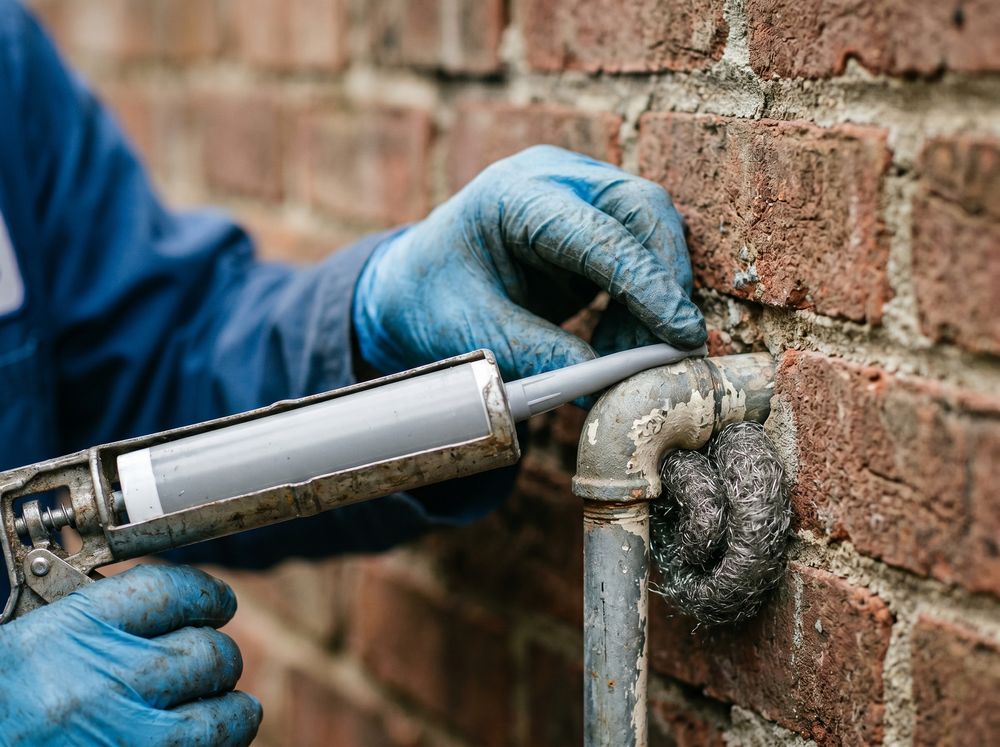
Exclusion is what ends the problem: steel wool, hardware cloth, and caulk close the gaps rodents are squeezing through. We pinpoint every gap and give you specific, prioritized recommendations for closing each one.
-
3. Knock Down the Population
Locked, tamper-resistant bait stations go outside at the activity points we found — intercepting rodents at the perimeter before they ever reach the house.
-
4. Monitor & Follow Up
Return visits check and restock the stations, verify the exclusion work is holding, and catch new gaps early. If activity returns between visits, we come back at no charge.
Many homeowners run rodent protection alongside our general pest control plan — the same exterior visit that keeps rodents out also keeps ants, spiders, and wasps off the perimeter. You can see everything we do on our services page.
7 Ways to Make Your Home a Harder Target
Whether or not you ever call us, these are the habits that keep mice and rats from picking your house in the first place.
- Seal any exterior gap wider than a pencil — around pipes, cables, and A/C lines — with steel wool backed by caulk; foam alone gets chewed through
- Replace worn garage-door sweeps and door weather stripping — the single most common entry point we find
- Store bird seed, pet food, and grass seed in sealed metal or heavy plastic containers, not the original bags
- Stack firewood off the ground and away from the house — a woodpile against the siding is rodent housing with a connected walkway
- Trim shrubs and tree branches back from the foundation and roofline; overgrown branches are a highway for roof rats
- Get cardboard boxes off garage and basement floors — floor-level cardboard is prime nesting real estate
- Keep trash and recycling lids tight, and pick up fallen fruit or spilled seed in the yard before it becomes a food source
Straight Answers on Safety
The most durable part of rodent defense uses no product at all — closing entry points with steel wool, hardware cloth, and caulk is purely mechanical, and we give you specific recommendations for exactly that. Where bait is warranted, it goes only inside locked, tamper-resistant stations secured outside the home, and we use EPA-registered products applied per label. Before we leave, we'll show you exactly where every station sits and walk you through any precautions or short re-entry times for kids and pets. If you want to know what's in a specific product, ask — we'll share the label.
Rodent Control Across the Southeast KC Metro
We're a local, Missouri-licensed company serving Lee's Summit, Blue Springs, Raymore, and Belton, plus the lake and golf communities where wooded lots, shorelines, and fairway edges keep rodent pressure high. Wherever you are on the map below, we've got you covered.
Rodent Control FAQs
How do I know if I have mice or rats?
Droppings are the quickest tell: mouse droppings are about the size of a grain of rice, rat droppings closer to a raisin. Gnaw marks, night noises, and nesting material point to rodents either way. Our free inspection confirms which one you're dealing with and where they're getting in — the exterior-first approach is the same for both.
Do you handle raccoons, squirrels, or other wildlife?
No — our rodent service covers mice and rats only. Raccoons, squirrels, and other wildlife need a licensed wildlife operator, and if that's what your inspection turns up, we'll tell you straight and point you to one rather than sell you a service that won't fix it.
Do you treat the inside of the house?
We focus on the exterior. We find the entry points at the perimeter — foundation gaps, garage doors, utility penetrations — give you exclusion recommendations for closing them, and place bait stations outside where the activity is. Stopping rodents at the wall is how we keep them from becoming an indoor problem.
Is rodent bait safe around kids and pets?
We take it seriously. Bait only goes in locked, tamper-resistant stations secured outside at activity points, and we use EPA-registered products applied per label. We'll walk you through exactly where every station sits and any precautions for kids and pets. And the most durable fix — closing entry points with steel wool, hardware cloth, and caulk — uses no product at all; we show you exactly what to close and how.
When is rodent season in the Kansas City area?
Mice and rats are active year-round, but pressure spikes in fall as nights turn cold and rodents push indoors for warmth and food. A mouse that moves in come October is settled in by January — the best time to close up entry points is before the fall rush.
How much does rodent control cost?
It depends on the size of the home, how many entry points we find, and how established the activity is — so we don't quote blind. We start with a free inspection and give you a clear quote before any work begins. No surprises.
Will sealing entry points really keep mice out?
It's the most durable part of the job. Bait and traps alone are a revolving door — new rodents keep using the same openings. Exclusion closes the door — we pinpoint every gap and give you specific recommendations for closing it — and our monitoring visits catch new gaps before they become new problems. If activity returns between scheduled visits, we come back at no charge.
Last updated